Feeds:
Posts
Comments

Archive for June, 2022

Having a rare disease that not many people have heard of can be a lonely business, and when doctors and specialists struggle to recognise or diagnose it, or even tell you what is going to happen to you as the disease progresses (because each case is unique), it can be lonelier still.

So, Scleroderma Awareness Day was created to tell people, including the medical community, what it means to have this disabling disease. Wednesday 29th of June is World Scleroderma Day and has been set aside to recognise the bravery of those who live with this rare and incurable disease.

So, how will you mark June 29th?

Around the world there are many different themes to celebrate the day:

In Europe the Federation of European Scleroderma Associations (FESCA) invite people to share their smiles using the hashtag #sclerosmile on social medias such as Instagram, Facebook and Twitter. They also invite people to help them with spreading the campaign by using #iammypassion.

Scleroderma Australia are asking people to raise funds and show their support through their Snuggle Up Campaign. They are also helping to raise awareness by sharing the Shine Like a Sunflower campaign which is being promoted at more than 110 iconic locations across Australia by bringing a golden glow to the community. As well as on social media: #ShineLikeASunflower #ShineALightOnScleroderma #WSD2022 #SclerodermaAwareness.

In Canada for over 20 years Scleroderma Canada have been challenging people to MAKE A MOVE FOR SCLERODERMA! Walking, running, biking, yoga-ing, canoeing, gardening – if you are getting active and moving your body, you are doing it right! 

“Know Scleroderma” is the National Scleroderma Foundation’s theme for June 2022 Scleroderma Awareness Month.

Throughout the month, they have been posting videos and photos of individuals affected by scleroderma on its social media.

This campaign highlights the Foundation’s belief that to know scleroderma is to understand the impact of a rare disease that is life-threatening for many and can cause physical disabilities and change lives forever.

What is Scleroderma?

Scleroderma is a chronic disease characterized by excessive deposits of collagen in the skin or other organs. The localized type of the disease, while disabling, tends not to be fatal.

However, diffuse scleroderma or systemic sclerosis, the generalized type of the disease, can be fatal as a result of heart, kidney, lung or intestinal damage.

Why June 29th?

Paul Klee

The gifted Swiss artist Paul Klee made painting his life’s work, but it was strongly influenced by his illness, systemic scleroderma. Paul Klee died June 29th, 1940.

The swiss Paul Klee Zentrum in Bern boasts the world’s most important collection of paintings, watercolours and drawings as well as archives and biographical material from all the creative periods of Paul Klee’s life which also can be visited through their website.

Scleroderma & Raynaud’s UK have partnered with FESCA to produce the below animated video to help raise awareness of scleroderma and the symptoms to look out for. 

Why not assist people like me to help raise awareness of this rare disease by wearing something teal on June 29 🙂

Or possibly you could watch the movie For Hope, a made-for-television drama film starring Dana Delany and directed by Bob Saget. Originally released in 1996 it is based on Saget’s sister Gay and shows the experience of a young woman fatally afflicted with the disease scleroderma.

Read Full Post »

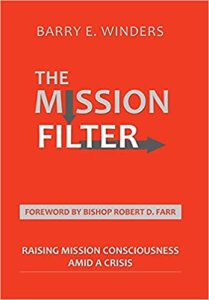
Barry Winders author of The Mission Filter: Raising Mission Consciousness Amid a Crisis says that the COVID-19 crisis is a hinge point for the church.

This pivotal time demands mission-focused leaders lest the church slip back into the busyness and non missional activities of the pre-COVID-19 past.

Over the past 25 years, almost half of my life I’ve been involved in church ministry in one form or another, from children & youth to worship ministry, small groups coordinator and just about everything in between.

Much has changed in that time, not just for me personally, but also within society as a whole, and especially in the church mission and ministry environment. In many ways if we are to look back at the past 25 years we will see that we have been part of a seismic shift that has been going on for quite a while.

Maybe, just maybe, we haven’t been able to identify this shift as clearly as we may have, because of the myriad of changes that have been going on simultaneously in and around us, or because we have been blind to what God is doing in and through us.

Recently Joseph McAuley, pastor of St Luke’s in Tauranga, NZ posted on his facebook page* that;  

The time of the contemporary mega-church as the exemplar and popular paradigmatic icon of the local church has come and gone. It will have its place but, in our nation of predominantly provincial cities and small towns, it’s not going to be the pot at the end of the rainbow so many pursue.

A new day is dawning, though it hasn’t yet arrived. We are currently in a liminal space, a wardrobe between two worlds, the dead ends of yesterday behind us and the newness of God’s tomorrow ahead. There are lamp posts pointing the way though, scattered here and there. Early adopters who looked out of place in the old paradigm but now appear to be perfectly positioned for the new. Prophetic voices who seemed nonsensical yesterday but today seem strangely in tune. Perhaps, in places, new realities can already be seen. Here and there, hints of the following…

Size will no longer dominate the score card. Big or small will no longer be the yard stick of what a healthy church looks like. Bigger won’t automatically be better, and might even be undesirable.

Natural localised expressions of the church will bubble up. Churches will feel free to specialize in what comes most naturally to them – craft beer rather than mass produced lager. Each will have distinctive flavours that appeal to some but not so much to others, but the pressure to try and be all things to all people will evaporate. Pastors and congregants will be content to have strengths and weaknesses in terms of programs and options.

This will be complimented by a more ecumenical perspective of the Church. Church goers will no longer feel the need to justify or engage in confirmation bias in regard to their local church. It will simply be their local community. Appreciation of the beauty of other local churches and their contribution to the Body of Christ will develop. No longer tribal Christians will be able to enjoy the strengths of other churches, worship nights, youth ministries, community mission and various seminars or events. They’ll be complementary not the competition.

They’ll be a renewed commitment to whole of life discipleship. Not a whole of life commitment to church meetings every night of the week, but also not discipleship compartmentalised to Sunday. The commitment will be to a whole of life discipleship that is engaged and attentive throughout the totality of one’s week, the totality of one’s life. A renewal of the disciplines.

The voice of the Spirit will be prioritised over other voices in one’s life. A deep commitment to tune into the whisper of God’s voice in one’s life will take over the agnosticism of one’s ordinary consciousness. Instead of one’s concern being what he said, she said, that article said, that Facebook post said, there will be a deep desire to discern the still and small voice of God in the moment. By default this will mean the silencing of other voices in our life, turning the volume down on social media, turning off the 24/7 noise of our phones, the conscious elimination of social commentary that overwhelms our being.

The pace of church will be that of a young family with kids. Slow-church will become one of the great invitations of the church in contrast to the fast-paced and high-tech world around us. Pastors and churches will engage in Christ-like ministry that meanders along at about 4.5 kms per hour. Not the speed of sound, not the speed of light, but the speed that Jesus walked throughout Judea and Galilee. Ministry at the speed of a Sunday stroll.

None of this is new or unknown, but it is scattered and piecemeal, practices of the subversive rather than the centre. Perhaps though, they’ll move to centre and launch a reformation. Time will tell. They’ll be other characteristics too. No doubt.

* Used with permission.

The thing is, post-Covid ‘lockdowns‘ many church leaders are seeing a shift in the narrative, as they recognise that churches “need to get back to ‘our‘ mission!” We need to do a thorough assessment of our methodology and missiology so that we can work effectively towards achieving what it is that God has called us out to be.

It is not enough to be providing great worship services, and ministries to the gathered – that just exasperates the area of consumerism within the church, or even to provide aid to those that require it without looking at the whole person – that creates a level of dependance.

If we are to achieve our mission we need to ensure that all of our interactions are interlaced with an acknowledgement of Christ and how He has made what we do, available for others – It is not enough for someone to look at what we do and know!

In the case of The Salvation Army here in New Zealand in many people’s eyes it is known more for its Op Shops, Drug & Alcohol services and Community Ministries and charitable work than it is is anything else – Which makes the verse from Romans 10:14 quite pertinent;

Before people can trust in the Lord for help, they must believe in him. And before they can believe in the Lord, they must hear about him. And for them to hear about the Lord, someone must tell them.” Romans 10:14 (International Children’s Bible)

So, may you become more mission-focussed in your interactions – for now is the time for mission-focused leaders!

Read Full Post »

I recently came across an article that featured on Grace Church in Orlando, Florida’s website, entitled ‘Rejoice in What?

It was written by Jamie Turco and it resonated with me on a number of levels – as she too is facing life with having to deal with an autoimmune disease that has taken away some of the simple things that we can all often take for granted. She writes;

Nick and I had taken the kids to a hot air balloon festival that evening. It was a bit of a bust due to wind and the constant drizzle of rain, but we were still enjoying the sight of the anchored, glowing balloons and talking with a small group of adults we’d met. 

One woman in the group and our daughter, Wren, especially hit it off and were chatting and joking around while we walked. At some point, they decided to have a cartwheel contest. Wren squealed in delight, “Mommy! Do one do one do one!” She was jumping in place, cheering me on. 

In those brief seconds, staring at her excited, expectant eyes, my mind had a burst of conflicting thoughts: You can’t do a cartwheel anymore. But this woman we’ve just met can do this with your daughter, and you can’t. Wren is never going to know you as the active person you used to be – but always as the one watching from the sidelines. You can do it quickly, just once.

I handed my purse to Nick and went for it, cartwheeling through the air. As I came up, arms raised, Wren – clapping – ran up and gave me a hug, both of us laughing. 

Inside, I felt like I might pass out from the burst of pain. My wrists screamed, hot and angry, as if every bone in them shattered the second my hands had hit the ground. 


Cartwheeling Into Suffering

It’d started two years before, after the birth of my son, Kai. The early symptoms presented as joint pain and swelling, muscle weakness, color changes in my hands when cold, and shortness of breath. Little daily tasks like bathing the kids or picking them up had become almost unbearable, and every brief game of chase ended in 15 minutes of me trying to breathe normally again. 

I remember one night when I needed to make dinner in a hurry; I couldn’t get the lid off a sauce jar. I tried everything I could think of until my hands throbbed, before I finally let out a scream of frustration. (I ended up going to the neighbor’s, who kindly opened it for me in one rudely-easy try, but I’m sure that “I loosened it for her.”)

When I was finally diagnosed with systemic sclerosis with polymyositis overlap, I had never heard of either of those autoimmune diseases – and I had already racked up a few others so I wasn’t a new member to the autoimmune club. This connective tissue disease causes progressive fibrosis and other changes in the joints, skin, muscles, blood vessels, and internal organs, and there is no cure. 

Today, four years in, I am thankful to have a team of specialists watching me like a hawk and medications that have improved my quality of life and slowed disease progression. By all accounts, it’s well managed at the moment. 

But every now and then, something happens that makes me acutely aware that this might never go away, and in fact, will likely get much more serious. I think random thoughts in the middle of the night like, Will I recognize myself when my face changes?I don’t want to be on oxygen at the kids’ weddings; or We need to go hiking SOON as a family, while I still can. 

In the middle of nights like these, the beginning of Romans 5:3 – at first glance – sounds nothing short of insane: “Not only that, but we rejoice in our sufferings…”

What’s the “that” of “not only that,” which precedes these verses? We get to rejoice in 1) having lasting peace through Jesus, 2) standing in His grace forever, 3) hoping in the glory of God, and… oh yeah, not only that, but also in sufferings! Slow clap. 

How does suffering fit into this series?

The Road No One Wants to Take

The truth is I am a dubious candidate to write about suffering. I struggle greatly with suffering on a spiritual level – more precisely, the suffering of others – especially when I can’t rationalize it, such as with mental illness, a house fire, pediatric cancer, or a sudden mudslide. Nothing makes me question God’s goodness or His very existence more. 

And yet, I can’t deny His presence and power in the midst of it.

Paul goes on to write: “…knowing that suffering produces endurance, and endurance produces character, and character produces hope, and hope does not put us to shame, because God’s love has been poured into our hearts through the Holy Spirit who has been given to us.” Romans 5:3b-5 (English Standard Version)

When I think about the qualities of perseverance, character, and a hope that doesn’t fail, I can think of nothing else that has the power to produce those besides pressure and hardship. I can think of nothing else that has the power to bring true, tested spiritual maturity. 

But even more significantly, I have experienced nothing else that brings me into the presence of God more clearly, deeply, and authentically. 

Born From Suffering

For me, the existence of autoimmune disease in my body was itself born out of a time of suffering. A year of intense emotional pain and stress more than a decade ago proved to be the environmental trigger for autoimmunity. But what I remember most about that year isn’t the symptoms, doctor appointments, or tests. 

I remember that it was the closest I’ve ever felt to God. On my knees, I was completely, fully persuaded that “my flesh and my heart may fail, but God is the strength of my heart and my portion forever” (Psalm 73:26). What else can persuade us with such certainty, but His presence in our suffering? 

Author K.J. Ramsey writes in her book This Too Shall Last

“Seated by the ledge where we’ve exhausted ourselves trying to push away suffering, we’ll see that pain embraced and accepted provides a panoramic perspective of the dawning of God’s new world. 

We’ll watch for the dawn while acknowledging the dark. And as the black and blue of night recede with the radiance of the rising sun, we’ll realize we’re in the company of Jesus.”

Resized

Last weekend, I left my wedding ring with a jeweler for resizing. It was a big deal for me. I haven’t been able to slide it past my first knuckle in more than four years, but I’d been putting it off “just in case” my joints return back to their former size.

I guess it was my small stance of defiance, and so there it’d sat in the ring box on my dresser, year after year. 

I learned there are two processes jewelers use to make a ring larger. Sometimes they stretch it, but that can weaken the ring considerably. So most jewelers choose the better way. They heat the band up and cut it. Then they add metal to it as a bridge and solder it back together. 

It seems to me that God also chooses the better way. He doesn’t allow pain to merely stretch us so that He can leave us as a weaker version of ourselves. Instead, even when we are broken in two, He adds Himself into our stories and solders us back together – with Him at the center. 

When I pick up my wedding ring next weekend, it will look a little different, I’m sure, and the hand that will wear it also looks different now. But to me, it will be deeply meaningful and beautiful, resized.

Read Full Post »

It’s hard to believe that 3 years ago today Annette & I were in the process of preparing for the end of our ‘Pilgrimage’ to parts of Greece, the Mediterranean and Anatolia (modern-day Turkey). As we were extremely privileged to be a part of a group that went on the Footsteps of Paul tour.

As noted in a previous post the Scriptures have definitely taken on a new meaning to us both since we visited the ancient communities where the Apostle Paul established the early church – and to whom he penned his epistles to the Thessalonians, Philippians, Corinthians, Colossians and Ephesians.

During our ‘Pilgrimage’ we took in the sights and sounds of Ancient Corinth which was one of the largest and most important cities in Greece.

Our sightseeing included the impressive Corinth Canal, a man made canal that connects the Gulf of Corinth in the Ionian Sea with the Saronic Gulf in the Aegean Sea. Ancient attempts to move goods initially overland started in the 7th Century BC when a tyrant called Periander constructed a simpler and less costly portage road, named the Diolkos along which ships could be towed from one side of the isthmus to the other.

After a number of failed attempts over the centuries that followed the idea of a canal was revived in 1830, works however finally began in 1881 and took until 1893 to complete the momentous task. The height of the walls are a staggering 79m from sea level.

While in Athens we visited the Acropolis; the Odeion of Herodes Atticus, the Parthenon, the Agora of Athens and the site of Mars Hill. As well as the site of the first ‘modern‘ Olympic Games, the Panathenaic Stadium.

We marvelled at the architectural and building prowess of the Meteora Monasteries which are located close to the city of Kalambaka.

Venturing on to Berea which was a prosperous city located on the main arterial Roman road, the Via Egnatia, which travelled through the provinces of Macedonia and Illyricum.

It is here that Paul had to leave Silas and Timothy after a group of Jews from Thessalonica came and caused a bit of a stir (refer to Acts 17:10-15). 

While in Thessalonica we visited the Basilica of St. Demetrius and took in the sights of the Roman forum, the old city and the Arch of Galerius, also visiting the local Corps (church). Before stopping by the Lion of Amphipolis on the way to Kavala (ancient Neápolis) to take in the sights of the beautiful harbour and huge Byzantine fortress as the sun set.

Leaving Kavala we set off for the Baptistry of Lydia, which is near to the archaeological site of Philippi.

This is where the Apostle Paul baptized the first Christian woman in Europe (refer to Acts 16:13-15). It was such a peaceful and pleasant site where we were able to marvel at the stained glass windows, the paintings on the walls and ceilings, and the mosaic tiling. As well as dip our toes in the cool refreshing stream.

In Philippi Annette shared a devotion contrasting the experiences of Paul and his companions as they move from celebrating with Lydia and her household one day, to being stripped, beaten and imprisoned the next. However, in both settings they prayed and sang hymns to God and in doing so influenced those around them in extraordinary ways.

We crossed the Greece / Turkey border at Alexandropoulos before heading to Gelibolu to take in the significance of New Zealand’s involvement in the 1st World War at Gallipoli, taking some time out to visit the memorials at Lone Pine, Chunuk Bair, ANZAC Cove and other significant sites.     

We had a free day in Çanakkale, which is a city and seaport in Turkey on the southern shore of the Dardanelles, which has historical significance not only as the place where the Allied Naval Fleet was scuppered by an assortment of converted fishing trawlers and civilian crews who had laid mines in the Dardanelles Strait. But also the 15th Century Çimenlik Castle and the historical archaeological City of Troy.

The following day we travelled to Alexandria Troas the site of a miraculous vision (Acts 16:8-10) and an amazing healing (Acts 20:7-12) where I shared a devotion about these events. Before travelling to view the Acropolis of Assos and the Acropolis of Pergamum.

We then travelled to visit the Agora of Smryna and take in the sights of Sardis which included the Gymnasium, Synagogue and other sites on route to Philadelphia, before moving on to Pamukkale the next day.

While in Pamukkale we visited the giant white terraced hill that has been built up bit by bit since early times made from a mineral deposit called travertine which is deposited from the ever-flowing hot spring. At the top lies the ancient ruins of Hierapolis, a city founded in the 2nd Century BC.

While in the region we also visited Ancient Laodicea, which benefited from its advantageous position on a key trade route and became one of the most important and flourishing commercial cities of Asia Minor. We also quickly took in the sights of where Colossae once stood before heading off to Kuşadası.

While in Kuşadası we set off to visit the Ancient City of Ephesus for much of the morning. Then after a quick bite to eat for lunch, we set of for the Basilica of St. John and one of the Seven Wonders of the World in ancient times, the Temple of Artemis (Artemision) which was a famous place of pilgrimage for centuries.

We had a farewell dinner with our Turkish guide that night before heading off over the border to visit the island of Patmos the following morning. This is where the Apostle John was exiled to and where he wrote the apocalyptic book, Revelation, which was sent as a circular letter to the seven churches in Asia Minor.

We visited the Cave of the Apocalypse and the Monastery of St. John before heading back to our hotel for a farewell dinner prior to our departure by ferry that night back to Athens.  

These past couple of weeks I have done a bit of reminiscing about our time there (which I blogged about starting here) looking at the numerous photos that we took and reading some of the books that we picked up while over there.

Although the ‘pilgrimage’ was drawing to an end, for Annette & I our visit was not quite over as we had more journeying to take in 🙂

Read Full Post »

Last month I shared a couple of poems by John Roedel that I came across on facebook that resonated with me on a number of levels.

Today I’d like to share a conversation with God that John has that features on his Hey God. Hey John. page

These personal conversations that he has, I’ve also found quite relevant to my own journey of faith and life that I am on, as I navigate the ever-changing normals in the times that we are living in.

Becoming!

Me: Hey God.
God: Hello, my love.
 
Me: I’m falling apart. Can you put me back together? 
God: I would rather not.
 
Me: Why?
God: Because you aren’t a puzzle.
 
Me: What about all of the pieces of my life that are falling down onto the ground?
God: Let them stay there for a while. They fell off for a reason. Take some time and decide if you need any of those pieces back.
 
Me: You don’t understand! I’m breaking down!
God: No – you don’t understand. You are breaking through. What you are feeling are just growing pains. You are shedding the things and the people in your life that are holding you back. You aren’t falling apart. You are falling into place. Relax. Take some deep breaths and allow those things you don’t need anymore to fall off of you. Quit holding onto the pieces that don’t fit you anymore. Let them fall off. Let them go.
 
Me: Once I start doing that, what will be left of me?
God: Only the very best pieces of you.
 
Me: I’m scared of changing.
God: I keep telling you – YOU AREN’T CHANGING!! YOU ARE BECOMING!
 
Me: Becoming who?
God: Becoming who I created you to be! A person of light and love and charity and hope and courage and joy and mercy and grace and compassion. I made you for more than the shallow pieces you have decided adorn yourself with that you cling to with such greed and fear. Let those things fall off of you. I love you! Don’t change! Become! Become! Become! Become who I made you yo be. I’m going to keep telling you this until you remember it.
 
Me: There goes another piece.
God: Yep. Let it be.
 
Me: So…I’m not broken?
God: No – but you are breaking like the dawn. It’s a new day. Become!! Become!!

John Roedel is a comic, husband and father of three boys based in Wyoming who began talking with “God” in 2015 on Facebook about his ongoing faith crisis.

What began as a flippant way of making light of his doubts in the Divine turned into something he wasn’t at all prepared for:

God wrote back.

Since creating the popular “Hey God. Hey John.” blog on Facebook three years ago, John has tackled such topics as his journey to mental health wellness, his lack of faith, the joy and pain of raising a child with autism, and grief, all in the form of a simple conversation with God.

You can pick up a copy of John’s latest book ‘Upon Departure’, a collection of poetry that explores the concept that our grief is a natural wonder that terraforms the landscape of our world in increments, from Amazon (Australia) here.

Read Full Post »

The other day, I shared a devotion from Rick Warren entitled ‘We are all on the same mission‘ where he outlined that “our mission is simply to pass on to others the same Good News about God’s love that somebody told you.

Now, the past couple of years have definitely shown that the church is not impervious to the effects of the Coronavirus pandemic, and in many ways church leaders have had a strenuous time as they adapt, pivot, morph, and change their methodologies to continue maintaining their congregations, let alone continuing to reach out to the community and provide assistance where required. This has brought about a much needed refocusing around the overall mission.

Recently I came across an article on ‘The Lewis Center for Church Leadership’ website, who were formed within the Wesley Theological Seminary in 2003, to promote the effective and faithful practice of Christian leadership in the church and the world.

Their approach in providing this ministry is grounded in identifying the strategic issues critical to the church’s future and discerning “actionable strategic insights” that can guide congregations and church leaders.

The article entitled ‘What Will Your Church Look Like Post-Covid-19?‘ was written by Barry Winders in early 2021 and continues to remain just as relevant to us all today as we continue to grapple with what the go forward is in each of our settings.

Whether we accept it or not, the COVID-19 pandemic crisis is a hinge point for the church. The church’s mission remains the same. But the execution of that mission has looked different during COVID-19 and will likely continue to be different after the crisis has passed.

You cannot always do in a crisis what you were doing before. The crisis demands something different from us to do the mission. It comes down to a binary choice. Do you want to be a pre-COVID-19 church that refuses to see the opportunities for mission created by the pandemic or a post-COVID-19 church that views the crisis as an opportunity to revitalize its mission?

Opportunity underlines the mission of the church — making disciples. Opportunity to wonder if God is inviting us into something new. We need to make sure that we do not carry over from pre-COVID-19 into post-COVID-19 something that eliminates our mission. If we carry over the infections of non-missional activities and busyness, the disruption for the church will be longer lasting than COVID-19 itself.

Focus on “why”

As we are figuring out how to function during this pandemic, there may be a temptation for the “why” to become dormant in the endless details of converting to new methods of doing church. The “why” cannot be forgotten.

The “why” is more indispensable now than ever before. The “why” is a fragile thing but robust in its reach.

Again, you may ask, “What will the church look like on the other side of the pandemic of 2020?” A mission filter can more readily identify harmful practices and attitudes we harbored pre-COVID-19. Non-mission activities are as contagious as the virus; non-mission busyness is especially infectious and can create a congregational culture of infections. Now these contagions can be captured and filtered so the mission guides forward-thinking adaptation and change. The mission remains bold and robust.

No turning back

For pre-COVID-19 folks who are hoping to return to the way things were before the crisis, there is no evidence of learning any lessons that were revealed during the crisis.

This kind of thinking requires little or no leadership at all. Things rarely turn out the way we hope. Sometimes we can be lucky and figure out why. But the most valuable lesson we can learn is that a person can find the lesson and learn from it, and that is better than being lucky any day.

Maybe we have been asking the wrong questions during this pandemic. Pre-COVID-19, we relied on in-person worship and in-person small groups. We have repeatedly asked, “When are we going back to in-person services? When can we have Sunday school or small groups?” Those are the wrong questions to ask.

The importance of focusing on mission

Some have found gratitude in this season of COVID-19. Others have discovered the lessons of generosity and patience.

But what about the mission?

The lessons of gratitude, generosity, and patience point to the mission of the church at the awakening of the crisis. The contemporary church is often built on protecting the community and sustaining the status quo, oftentimes at the exclusion of other people.

But how could excluding groups of people benefit the people who are doing the excluding?

Making disciples can be easily desensitized and derailed by social media and chatter that promotes divisiveness, exclusion, scarcity, and resistance to change. Using a mission filter focuses the leaders’ attention on the mission and eliminates the desires of the people in the organization to do the minimum. It accentuates the aspiration, the chance to make a difference instead. Isn’t that what has happened in many instances during the COVID-19 crisis?

Why is a mission filter so critical for the church at the hinge point of the pandemic? The mission will be the same. The execution of the mission may be different. If a mission filter is needed, it is needed even more in a crisis. Any imagination and innovation in doing things is oiling the hinge so that we do not become rusty and lose our usefulness for the mission. This worldwide crisis demands more of our leaders. At this pivotal time, leaders can do three things to direct their awareness of the mission. They must listen, imagine, and lead.

Although the pandemic itself is far from over as many scientific specialists have come to a level of acceptance that it will be with us for a number of years to come – hopefully the requirement to lockdown our communities will not be.

Therefore, I believe that there will continue to be an ongoing process of evaluating and assessing the ‘why’ and ‘how’ we do mission ‘effectively‘ for the next few years or so at least. We’ll need to continually be asking ourselves “How do we as a church better impact our communities with the love of Christ in such a complex world?”

The thing is, Do you want to be a pre-COVID-19 church that refuses to see the opportunities for mission created by the pandemic? Or do you want to be a post-COVID-19 church that views the crisis as an opportunity to revitalize its mission?

Over the next few weeks we’ll be unpacking this in a bit more detail 🙂

Read Full Post »

« Newer Posts - Older Posts »