Feeds:
Posts
Comments

Posts Tagged ‘Gratitude’

I’ve previously written about giving thanks in all situations, and ‘The Importance of Thankfulness‘, and the other week as part of my daily devotions, I was again reminded that;

In everything give thanks.
1 Thessalonians 5:18
(New King James Version)

Over the past few weeks or so, I’ve been fighting a nagging, persistent, raking cough that, at times, also affects my ability to breathe freely. Which with my condition, SSc-ILD (Systemic Sclerosis / Scleroderma with associated Interstitial Lung Disease) can make things particularly difficult to manage.

The things is, one can never really tell when they should seek medical assistance or just wait until things settle down. And needless to say, I’ve been given a prescription by my doctor of Prednisone for the next week or so to see if that helps relieve some of the symptoms I’m experiencing.

The thing is, breathing is a complicated process. It requires physiological precision, and the average person takes about twenty-three thousand breaths a day. And while we’re inclined to thank God for everything that takes our breath away, maybe we should also thank him for every breath that we take.

In 2000, Pastor Ed Dobson was diagnosed with motor neurone disease, a degenerative disease with no known cause or cure. Sharing his ongoing struggle to be thankful while living with an incurable condition, Dobson writes:

There are many things for which I am not grateful! I can no longer button… my shirt. I can no longer put on a heavy jacket… [or] raise my right hand above my head. I can no longer write… [or] eat with my right hand. I eat with my left hand, and now even that is becoming a challenge. And over time… these challenges will get worse…

So, what in the world do I have to be grateful for?

So much. Lord, thank you for waking me up this morning… that I can still turn over in bed… that I can still get out of bed… that I can walk to the bathroom… that I can still brush my teeth… that I can still eat breakfast… that I can still dress myself… that I can still drive my car… that I can still walk… Thank you that I can still talk…

The list goes on… I have learnt… to focus on what I can do, not on what I can’t do. I have learnt to be grateful for the small things in life and for the many things I can still do.

So, that got me thinking – what do ‘I‘ have to be thankful for?

As I was sitting in the medical day unit at Christchurch Hospital this week, I started a mental list and concluded that I have a multitude of things and people to be thankful for.

Doctors, specialists, nurses, and medications not withstanding, medical administrators, and back office staff etc. and even a long list of people involved in the building and fitting out of hospitals and those that develop, build and provide much needed monitoring and administering equipment, along with manufacturing pharmaceutical companies with people focussed on research and development let alone the manufacturing of medications.

Also, family, friends, colleagues, associates, people I’ve ministered to, and those that have ministered to me. Those who have taught me how to work through things, those that continue to speak into my life with words of encouragement – And again the list can go on and on.

The above is only a snapshot of people and things that started coming to mind as I mentally started preparing my list, I’m sure that if I had some paper and a pen I would have noted even more.

So, what in the world do ‘YOU‘ have to be grateful for?

I’m sure if you spend some time thinking through some of the circumstances that you find yourself facing, there will be a multitude of people and things that you could be thankful for. Maybe it would even be worthwhile grabbing some paper and a pen and start writing down who and what comes to mind – it may just surprise you as much as it did me when I started my list.

So, ‘In everything give thanks’ for God does not leave us alone in this world to face the circumstances that come our way. He surrounds us with a multitude of people and things that can assist us – if only we have eyes to see.

As for me I am truly thankful and immeasurably blessed.

Blessings ’til next time 🙂

Read Full Post »

Yesterday afternoon, I was hooked up to an IV infusion pump in Christchurch Hospital, getting my monthly fix of Tocilizumab.

At the beginning of this rollercoaster journey, all those years ago, who would have thought that getting a top-up dose of medication, every month, would be a necessary part of my life.

And as I sit here watching the nurses busily going about their business, assisting others and contemplating the journey that I’ve been on for the past 7 years.

I’m left thinking that in many regards, it’s amazing how quickly one’s life can be turned on its head and you become reliant on other people.

This, in turn, makes me feel extremely grateful for a whole heap of people that in the normal course of one’s life I probably wouldn’t have necessarily given a second thought to, unless of course I suddenly needed their assistance.

I mean, it’s not like I didn’t appreciate the tireless work that doctors and nurses do on a daily basis, or recognise the lack of appreciation that is often forfeit in their profession as they go about looking after people. But over the past few years, I’ve come to be really appreciative of all that they do.

As I’ve shared my health journey, I’ve often mentioned the importance of being grateful / thankful, to have a sense of gratitude, for a multitude of stuff in our lives. After all, when we are thankful, it often exudes a positivity in our very being that resonates deep within our soul.

But today, I’d like to point out the importance of an innumerable number of people that I’m thankful for, people that I’ll probably never get to meet, or even know personally – but each have been instrumental in various aspects of my health journey.

Now this may be something that you’d also like to explore in examining your own life story to date. But here’s a breakdown, of sorts, of those that have had a part to play in mine thus far. Recognising that it is by no means a full account of people that have had some sort of influence along the way.

Firstly, those who are involved in the research and development of the multitude of medications that we have access to in today’s world.

As well as the ongoing work that they are doing to develop new medications that will hopefully make the lives of people like me better and potentially find cures for rare diseases and disorders.

Secondly, those who prepare the medications, ensuring that the right dosage is administered for the different diseases that the drugs can be utilised for. Along with those who administer the medications, ensuring that I am not having any adverse effects as I go through the infusion process.

I also note the amount of back office and front office people involved in organizing appointments, ordering the medications and multiple other supplies that are needed to create environments in which the drugs can be administered.

The doctors and nurses, specialists etc. that have been part of the journey (not just those that I’ve interacted with) that identified and diagnosed symptoms and provided much needed information around how to deal with this rare disease – in some cases they have been discovering new things along the way as well as they have not been familiar with Scleroderma.

I also acknowledge the people here in Aotearoa, New Zealand that have been a part of the funding processes etc. that enable us to have a mostly free public health service…

As I continue thinking about all of the people that have been a part of my health journey, and who I’m thankful for – I think about all of the people that I’ve interacted with through support groups, both in-person and online.

You see, we each have something to offer one another as we navigate our own journeys – be that through support, encouragement, knowledge, advice, and experiences that can all be of worth to our own situations.

Recognising that the challenge with Scleroderma is that no one person’s symptoms are identical and there is no one way treatment 😦

I also recognise those that have been a part of the journey in a work / ministry capacity, some have offered words of encouragement (or even challenge) at just the right time.

Others have been involved in decision-making processes that have impacted my life as I navigate the where-to-from-here at various points along the way.

Lastly, and I guess most importantly those friends and family, especially those closest to me that have seen the good, bad, and the ugly and still hung around 🤪

I’m sure there are many more that I’ve probably missed, but as I continue getting these infusions, over the months and years to come, and share aspects of my journey, you may get a mention too.

Suffice it to say, I’m extremely grateful for those who have been and continue to be a part of my journey, even if they don’t know me personally, or I them – for without them I probably wouldn’t be where I am today.

Now that’s a sobering thought!

Just think if one person in the chain wasn’t there, where would I be today?

The thing is, who are the people in your life that you are thankful for?

You don’t necessarily have to have a rare incurable autoimmune disease to do a mini account of those that have influenced your life in one way or another.

This process can not only help anyone recognise the importance of those people around you (both known and unknown) that have had a part to play in your own journey through life. It can also re-emphasise the fact that you and I are not alone, as we all need a multitude of people in our lives to help us along the way.

Blessings ’til next time

Perry 🌻

Read Full Post »

I was recently emailed a link from Self-Manage Scleroderma who created a web based self-management program called ‘Taking Charge of Systemic Sclerosis (TOSS)’.

This program was designed is to help those suffering with Scleroderma learn about the disease, manage their symptoms and learn strategies to help advocate for themselves.

It explores 10 ways in which we can find joy as we navigate a number of ‘new‘ normals along our health journey with a rare, incurable autoimmune disease.

The thing is, sometimes it can be extremely hard to find joy in the middle of everything that you are going through. And even those that have a strong faith can succumb to feelings of helplessness, especially when fatigue gets on top of them – sucking the very life that joy can bring out of them.

So, maybe some of the below helpful ways to find joy will help combat those times when you feel despondent and barely able to get out of bed through lack of energy or motivation.

1. Every day, do something that reaffirms the beauty and joy of living.
Take time to look around and you’ll find plenty of proof that beauty is everywhere. Have your morning cup of coffee in sight of the sunrise, or make it a point to see the sunset. Nature brims with the miracle of life — get outside and soak it in.

Why not go for a walk through a park listening for birds, watch clouds in a robin’s-egg-blue sky, go barefoot in lush grass (if it is not too cold), or skip stones on a lake. Stop to smell those roses, and while you’re at it, buy some fresh flowers for the house.

2. Do something!
A feeling of helplessness in the face of tragedy or human need and suffering contributes to stress. Volunteerism is one of the best ways to give activity purpose, and is therapeutic. In helping others, you help yourself.

There’s a lot to be said for just practicing random acts of kindness. Recent research found that a “joy center” of the brain thrills more to unanticipated delights than to what’s expected.

So, maybe in the next day or so why not surprise someone with a small gift. The payoff for you is experiencing the joy of giving.

3. Turn off the television and radio news.
Reliving the horror of 9/11 in documentary form can open old wounds. Choose instead to rent a feel-good movie or watch family videos you haven’t seen in a while. Or pull out those scrapbooks and albums. Gather everyone around the stereo for an old-fashioned life-affirming radio show. Even just turning up some favorite old tunes can rejuvenate the spirit. Sing along!

4. Get to know your neighbors.
A sense of neighborhood and community increases feelings of security and connectedness. Don’t let the month of September become tainted forever, or allow loss and grief to steal your joy.

Welcome fall with new neighborhood traditions: Plan a block-party cookout or chili cook-off, organize a pre-holiday cookie exchange, or host a multi-family garage sale. It need not be anything elaborate. Share a batch of cookies with the folks next door or just sit on the front porch talking with the neighbors. Friendships develop in the details of daily living.

5. Laugh.
It really is the best medicine, reducing anxiety, depression, and fear. In fact, studies show that laughter is one of the best ways to let out negative emotions without causing harm.

Buy a funny book and chortle away, tell silly knock-knock jokes with the kids, invent a stupid pet trick, or watch a screwball comedy the whole family will enjoy.

6. Start and end the day on a positive note.
Your mother always told you to, and the advice is still great: Count your blessings. When you wake up, start your day with a thankful thought. Ditto at bedtime. If you feel down during the day, actually make a list of the good things in your life.

Meditate, sing, practice yoga, light a candle – find small positive rituals that center you with good thoughts and positive energy as you begin and close the day.

7. Don’t allow anger and rage to rule your life.
Misdirected anger isn’t healthy. Consciously replace churning emotions with serene thoughts. Think of a particularly tranquil time at the ocean, or imagine yourself in a favorite soothing place.

Find healthy ways to let off steam: exercise, make music, garden, paint, write out your thoughts in a journal. If you continue to feel overwhelmed or undermined, you can turn to prayer or professional assistance for help in handling upsetting feelings.

8. Think of something that makes you smile.
Before you get out of bed and brush your teeth, get your mental and visual focus on something that will warm your heart. Try putting a favorite picture – hospital photos of your newborns, the brand-new kitten, a perfect moment on a family vacation – on your bedside table. Look at it first thing in the morning.

Starting off your day in a positive frame of mind will set your spiritual metabolism for the rest of the day. Smiles not only exercise muscles that fight frown lines, they actually boost your immune system.

9. Be forgiving.
Forgiveness is an act of the will, an action you can take even when your heart and feelings seem to be lagging behind in bitterness. It might be impossible to forgive actual perpetrators, but you can hope and pray for transformation in them.

In your own life, give up grudges and let go of old toxic memories. Reconcile with estranged friends and family members if you can, and commit yourself to giving others the measure of forgiveness you would like extended to you. Don’t sweat small grievances.

10. Nurture your family spirit.
We live in a different world now, a world that needs love more than ever. Show your commitment to those you love in word and deed. “I love you” means a lot, and so do the actions that make the words more than greeting-card sentiment. So say it, show it, and hug a lot.

Strengthening family ties cultivates stability in your home. See and call out-of-town family and nearby relatives more often. That family feeling can grow well beyond your natural kin.

Even if you only end up doing only one of the above actions consistently over the course of a few weeks, you will slowly find that it starts having a positive influence on your thoughts and feelings.

You may be interested in reading the following posts I’ve written previously:

How Can We Develop Joy?

Where will you find joy?

Joy in the Hard Times

Choose Joy

Responding to God at All Times

How to find Inner Peace when facing Scleroderma’s challenges

Longing for Greater Serenity in Life

Hopefully you find these of helpful.

Blessings ’til next time 🙂

Read Full Post »

The following article was written by Amy Gietzen for Scleroderma News, which is a digital platform intended to provide the scleroderma community with the most recent news and information on the disease, as well as first-hand community perspectives from our patient and caregiver columnists.

Amy resides in Buffalo, New York, with her amazing, supportive family, friends, and her three cats. Her passion in life is helping others, and her hope for the column that she writes on Scleroderma News is that rare patients who read it will feel empowered and use their voices to speak up about their own medical journeys to incite change and awareness for the rare disease community.

Amy writes;

Most of the time, I try to remain positive and open-minded. I learned this a long time ago while dealing with the ups and downs of scleroderma.

If I can push through the painful emotions that scleroderma causes, I can live a much more enjoyable life with a positive perspective.

Don’t get me wrong, not every day is a walk in the park.

I’ve had more days than I care to count when it was a major battle just to crawl out of bed and start the day. It has taken me a long time to come to terms with my diagnosis and to be able to sit in peace with the trajectory my life has taken.

My emotions tend to zigzag all over the place, like lightning bolts during a storm. At times, I have found it extremely difficult to put a positive spin on the events prompted by scleroderma, such as undergoing toe surgery or having eight teeth extracted to avoid eating with rotten teeth.

These events were far from easy, and the choices I faced were equally difficult. But I took a deep breath and looked at the bigger picture.

What I saw was that I am lucky to be alive and still able to make the most of my life, even in adverse circumstances. I can enjoy moments with family and friends and live in the here and now. That sentiment has saved me from major depression and heartache on several occasions.

This has been true even in times when I feel like my life is at its lowest point, like when I had to drop out of college due to medical complications or when I had to stop working and go on disability.

I try to maintain a perspective that things could be worse. Somehow, somewhere, someone is worse off than me, which makes me feel grateful.

Gratitude can make anyone turn a frown upside down. This attitude led me to meditation to combat the unpredictable nature of life with scleroderma.

I have found that during times of extreme adversity, when nothing is going my way, a moment of quiet gratitude can make the impossible seem like it is within my grasp.

I’ll close my eyes and just feel, letting every emotion run through my body, good or bad. I’ll sit with these feelings, mentally sorting through all of the gray areas that come with life as a scleroderma survivor.

I’ll remind myself that it’s OK not to be OK, and that I am human. Then, I’ll dry my eyes, roll my shoulders back, and take my day one step at a time. Taking my life too seriously can cause an overwhelming sense of anxiety. So even in times of dire stress, I try to keep it light.

Turning to positivity in negative situations can make it a little easier to bear, which makes all the difference. When I’m just trying to get through the day, finding peace within myself is a must.

Living with scleroderma will never be easy — it’s just the nature of the beast. But learning to calm my nerves and take the good with the bad has helped me learn to live amid the chaos that is scleroderma.


I was initially diagnosed with Scleroderma back in November 2018 as my wife and I with our youngest daughter were in the process of relocating to Wellington from Invercargill (New Zealand).

Since then I have been sporadically sharing my own health journey online and providing links to other interesting posts, articles, news and more in an effort to help raise awareness of this rare and incurable disease.

Why not check out them out here, as well as the page I’ve created to help people get a bit of an understanding of Scleroderma, Interstitial Lung Disease & Raynaud’s.

I have learnt the importance of thankfulness and being grateful in the everyday moments of life. I’ve found ways that help relieve stress and enable me to relax and rest so that I can enjoy life to the full. 

So, if you’d like to explore ways in which I can help you cultivate an attitude of gratitude in your life, or just need someone to help support and encourage you then contact me via Spiramentum Ministries.    

Blessings ’til next time 🙂 

Read Full Post »

The other week I posted about the importance of thankfulness and the need for us to create a practice of gratitude in our lives, as it can be hugely beneficial for our health and well-being. 

Interestingly, one of the areas that seems to consistently come up as an area of development for people that I’ve been working with, through the Natural Character Development (NCD) Inspiration Coaching process, is that they need to answer the question; “What am I grateful for?” 
So, that they can develop a more hope filled and inspiring life.

You see, a lack of being thankful, or not showing gratitude, often sees people holding back from seeing what is actually good in their lives and the lives of those that they come in contact with, and therefore clouds their perspective of the world around them.

And this lack of perspective leaves them partly believing in a world that is not necessarily real – an illusion, distortion, shadow, fantasy of what life really is.

Worse still they’ll end up living in ways that fight against the way of true life and can drain life, not only from themselves but also those that they interact with.

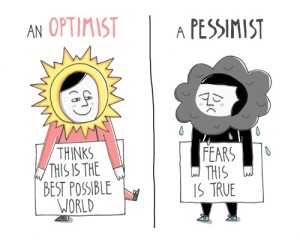
I know this can be a bit of a generalisation, but people tend to want to hang around optimists rather than pessimists.

So, growing in gratitude and developing a practice of gratitude will help clear the fog that is currently concealing very real reasons for hope, making for a more inspired and inspiring experience of life. It can also help you to discover what truly matters most in life and expose what is, in reality, of no true value at all.

In a post on Pastors.com Rick Warren says, “Christians should be the most grateful people on the planet. As they know that God has given us life (John 5:21), has saved us (Psalm 13:5), and will never stop loving us (Psalm 107:8). What incredible reasons to celebrate!

Sadly, this is not always the case!

However, there are everyday habits that we can incorporate into our lives so that we can have a grateful heart:

  1. Sing to God.

Did you know God sings? The Bible says, “He will rejoice over you with joyful songs” Zephaniah 3:17 (New Living Translation). You’ve never heard God sing to you, but in heaven you will. It’ll be the most beautiful sound you’ve ever heard—the sound of perfect joy.

God will sing to you because he loves you. It’s also an ideal way to say “thank you” to him. That’s why Psalm 147:7 says, “Sing out your thanks to the Lord” (New Living Translation).

When you gather with your church family to worship, you join with others to express gratitude to God for all he has done and all he will do in your lives.

You probably have people in your church who don’t sing because they don’t think they sing very well. (Pastor, maybe this is you!) Here’s a truth to share with your congregation: God loves how we sing to him. He wants to hear our voices because he gave them to us, and he loves to hear our praises. 

  1. Giving back to God.

You know the story. Four hundred years ago, a group of European Christians who were persecuted for their faith came to North America to establish a colony so they could have religious liberty. Then, they established Thanksgiving, along with Native Americans, to thank God for what he had provided. 

But America wasn’t the first country to institute Thanksgiving. Three thousand years earlier, God told the Israelites to establish a Thanksgiving festival every year called the Festival of Weeks, so they could celebrate God’s goodness.

During this Thanksgiving festival, God told the Israelites to collect an offering: “Celebrate the Harvest Festival, to honor the Lord your God, by bringing him a freewill offering in proportion to the blessing he has given you . . . Do this at the one place of worship” Deuteronomy 16:10-11 (Good News Translation).

God’s people have practiced a Thanksgiving offering for thousands of years. We practice it at Saddleback. You probably have practiced it at your church too. It’s an important part of how we say “thank you” to God.

God doesn’t need our money. He wants what our money represents—our heart.

How we use our money shows our priorities. When we tell God “thank you” through our offering, we’re showing him he is the priority of our lives.

  1. Communion with God. 

Depending upon your church tradition, you may call it Communion, the Lord’s Supper, or the Eucharist. The Bible tells us it’s one of the most important ways we express gratitude to God. 

In fact, the term Eucharist literally means thanksgiving. It’s meant to be a model of what it looks like to express gratitude to God. 

Twice in Paul’s description of the Lord’s Supper in 1 Corinthians 11:23-34, he reminded readers to remember. Paul tells us to remember Jesus’ broken body and spilled blood so we can thank God for what he did to secure our salvation. 

Paul wrote a chapter earlier, “The cup we use in the Lord’s Supper and for which we give thanks to God: when we drink from it, we are sharing in the blood of Christ” 1 Corinthians 10:16 (Good News Translation).

The Bible says we were dead and now we’re alive. That’s what we remember—and thank God for—when we partake of the Lord’s Supper. 

That’s worth thanking the Lord for this weekend—and every day of our lives.

The above three habits can help us each develop a practice of gratitude in our lives if we commit to doing them on a more regular basis 🙂

Growing in appreciation, thankfulness, and gratitude as mentioned previously can help clear the fog that is currently concealing very real reasons for hope in our lives – And I’m sure we can all agree that we all need more hope in our lives!

Therefore, we each need to develop a practice of gratitude so that we can become more inspired and inspiring to those around us – Afterall, God wants us to develop it and has provided us with the necessary ways in which we can work towards it for ourselves. 

If you’d like any further information about the Natural Character Development (NCD) Inspiration Coaching process and how it can be of benefit to you, then please drop me a line via email, make an enquiry here, or leave a comment below.

I’d be more than willing to let you know about what’s involved and the costs etc.

Blessings ’til next time 🙂

Read Full Post »

I don’t know about you, but every now and again I can get extremely frustrated by circumstances that I can’t necessarily control.

I can become ungrateful, moody and a bit short with people from time to time.

Now, some of you who know me personally will find this hard to believe 🙂

As for the most part I am an upbeat person with a bubbly persona and a positive attitude, always trying to see the bright side of life, at least for the most part.

Occasionally though I rear my ugly side and I can get grumpy, quiet and distant.
Surely I’m not the only one! 🙂

Currently I’m having to isolate at home due to my health condition, which in effect will see me having to work from home until the end of January, which brings with it a number of challenging aspects that could cause me to become even more frustrated and upset. And yet I’m not!

Maybe that’s because I have learnt the importance of thankfulness and being grateful in the everyday moments of life.

I know for some people that when they read Scripture references such as 1 Thessalonians 5:18 (from The Passion Translation) where it says that “in the midst of everything [that they should] be always giving thanks, for this is God’s perfect plan for [us] in Christ Jesus” they struggle.

The New International Version puts it this way “give thanks in all circumstances;
for this is God’s will for you…

Give thanks in all situations is this really possible? And it is part of God’s perfect plan, or His will for us – really!

How can you be thankful when your life has been literally been turned upside down by some traumatic experience?

The truth be told, we need to ‘give thanks’ and be grateful regardless! For in a single moment our entire lives can change. In 2020 Coronavirus literally shut down our world and we have been having to adapt ever since.

In this fast-paced world in which we live, with its constant changes, and unending deadlines and commitments, it is absolutely vital to take time each day to calm our busyness and recognise the importance of thankfulness.

You see, the act of thinking of just one thing that you are thankful for can help slow your heart rate, relax your muscles and joints, calm your mind, and bring an element of peace to your day regardless of how frenetic it has been.

God’s perfect plan

Could this be why in 1 Thessalonians 5:18 it says this is God’s perfect plan for us?

Afterall, God doesn’t want us constantly striving and stressing about things in life.

He wants us to live life to the full, and learn how to truly rest in Him.

Being thankful in all circumstances helps us develop an attitude of gratitude and as the Apostle Paul espouses in Philippians 4:10-14. He had learnt “the secret of being content in any and every situation.

He had also found the recipe for being happy, (thankful) and he had come to know without a shadow of a doubt, that he could make it through anything in life, because of the One who made him who he was (refer to The Message).

John Hopkins studies and research has found that there is a direct correlation between having a positive attitude, being thankful, and your mental health. And ultimately it can even improve your physical health and well-being.

So for people who have rare diseases or disorders, or an invisible disability like Interstitial Lung Disease, Scleroderma and Raynaud’s learning the importance of thankfulness and developing a practice of gratitude can be quite beneficial.

As part of the RENEW Fatigue Study I was encouraged to create a practice of gratitude, because it can be quite challenging for people with Scleroderma to feel thankful for some things in life. Especially when in a single moment they can move from being ready to face the world and all its challenges – to barely being able to make it out of bed.

I found that by taking the time every evening for a month to log one or two things about people, things, or events for which I was thankful was quite helpful however.

The whole premise was that each day you would store these moments in either a literal piggy bank or via the app and once the month was over you were able to go back and review all those things that you had noted.

Being thankful in our everyday life and looking at those things that one can be thankful for, even if it is just the small things in life regardless how we are feeling, can have a huge positive impact on our health and well-being.

Over the past couple of months I’ve found that I relate to a number of quotes and images that have come across my Facebook feed like this one from S. C. Lourie;

I just don’t think I’m looking for the big moments in life anymore. It’s more the simple ones that make for a beautiful day now. Like the sun rising and the moon dancing and the wind singing and the leaves grooving, and the kids laughing and music playing, butterflies twirling, heart-smiles staying… and me being present to witness all these little beautiful things. This is what makes for a happy and peaceful life, I’m sure.

Another one reads; “If someone comes into your life and has a positive impact on you, be thankful that your paths crossed. And even if they can’t stay for some reason, be thankful that somehow they brought joy into your life, even if it was just for a short while. Life is change. People come and go, some stay, some don’t and that’s okay. Remember the good times and smile that it happened.

We may not be able to control our circumstances, but we can control our attitude and responses towards them. That’s why creating a practice of gratitude, being thankful is so important 🙂

In 2019 the Thankfulness Project was started to encourage all New Zealanders promote the practical use of everyday thankfulness, as they believe that gratitude and thankfulness practiced daily creates better mental healthiness.

They have recognised that “when you think about what you do have and what is going well, instead of what you don’t have and what is going wrong, you will have a happier and more optimistic day.

Why not challenge yourself to write down three things you are thankful for everyday, and why for the next week or so using the Thankful Journal page, which you can print off or download and review at a later stage. Alternatively you could check out the 25 Things I am Thankful for Personal Poster Challenge.

You might just be surprised by what you are thankful for!

At the end of the day we each need to learn the importance of thankfulness and how we can create a practice of gratitude – Blessings ’til next time 🙂

Read Full Post »