As I was sitting in the spa the other night gazing at the multitude of stars in the night sky that were on display. I was reminded of the scripture found in Psalm 8:
“When I consider your heavens, the work of your fingers, the moon and the stars, which you have set in place, what is mankind that you are mindful of them, human beings that you care for them?” Psalm 8:3-4 (New International Version)
Not so long ago I read a devotion that went something like this:
For thousands of years, people have gathered around campfires and peered into the night’s sky, studying the stars.
Now, thanks to telescopes and satellites and advances in modern technology, we’ve uncovered more about God’s celestial creation than ever before: diverse planets, interstellar dust, mysterious black holes, and billions of other galaxies.
What we’ve discovered, however, is not new to God. It’s the very same heavens and the very same earth that He spoke into existence at the very beginning of time. And though we’ve only scratched the surface on what’s still to be discovered, the vastness of the heavens and the brilliance of its design beckons both humility and worship.
The same God who hung the sun, moon, and stars in the sky also created us. He created you and I in His image and entrusted us with His creation according to the Book of Genesis: God “blessed them, and said, “Have many children, so that your descendants will live all over the earth and bring it under their control. I am putting you in charge of the fish, the birds, and all the wild animals.” Genesis 1:28 (Good News Translation)
It’s also mystifying to think that He considers us His prized possession over all of his creations as we can read in James: “… we, out of all creation, became his prized possession.” James 1:18 (New Living Translation)
Deuteronomy 14:2 says that: “… the Lord has chosen you to be his treasured possession.” (New International Version)
Like King David, acknowledging how God sees us, recognising what He has done in and through the creation story, let alone what He has done in our own lives, should humble us and compel us to worship, and we should be in awe of Him.
For God is an awesome God, an almighty God, who reigns over heaven and earth, and His awesomeness is on display day and night, all around us.
So, who are we?
Who are we to be loved, chosen, and redeemed by Christ – especially when we don’t deserve it?
Who are we, when we consider the magnificence of our Creator, to be made in His image?
Who are we that God is mindful of us?
Who are we that He cares for the details of our lives?
We are His people. His children. We belong to Him. We are cherished by Him. He entrusts us and has chosen us.
In a world that often times feels as if it is spinning out of control and things can crowd in on us – He is where we should put our confidence. He is where we should put our trust and hope for the future.
So today, let’s trust in our creative, compassionate, and loving God.
Why not spend the next few moments worshipping our awesome God and thanking Him for His provision in our lives.
After all – Our God is an awesome God, He reigns from heaven above With wisdom, power, and love, Our God is an awesome God
As I was contemplating this further I was reminded of a couple of hymns that resonated with me.
The first is a hymn written by Edwin Hatch, Breathe on me, Breath of God and the second is written by Elizabeth Ann Porter Head, O Breath of Life.
According to hymnary.org, Edwin Hatch was an English theologian and although his hymn-writing was limited he wrote Breathe on me, Breath of God. It was written about a decade before his death while Vice-Principal of St. Mary Hall in Oxford, and prior to taking up the position of Rector of Purleigh. He writes:
Breathe on me, Breath of God
1Breathe on me, Breath of God, fill me with life anew, that I may love the way you love, and do what you would do.
2Breathe on me, Breath of God, until my heart is pure, until my will is one with yours, to do and to endure.
3Breathe on me, Breath of God, so shall I never die, but live with you the perfect life for all eternity.
As I was listening to this song and thinking over its meaning, I was drawn to the life of Job and all that He had gone through.
The tragic loss of his family, the loss of his wealth, his ill health, and the loss of all but three of his friends – who he had been discussing the merits of his life and why he should remain faithful to God.
In the midst of all his loss and as we approach the end of the discourse with his friends we find a most poignant statement: “The Spirit of God has made me, And the breath of the Almighty gives me life [which inspires me].” Job 33:4 (Amplified Bible)
These words are spoken to Job by Elihu, who claims to speak for God and according to Job 32:11 he had “been waiting to hear what [his three friends] had to say, [he’d] listened attentively to [their] arguments as each one of [them] chose [their] words with care.” (New Catholic Bible)
Elihu had become “upset with Job [and his friends] because [Job] justified himself rather than God [and even expressed doubts about God’s character].” Job 32:2 (Amplified Bible)
Elihu espouses that God is the Almighty and that we must all acknowledge and submit to His supremacy because of who God is. He draws to our attention instances of His kindness or even His tolerance toward us, pointing to the constant wonders of creation and of the seasons, and of His abundant blessings in our lives.
Breath of God = Life!
He accredits the breath of God, as the source of all life and understanding.
You see, the Hebrew word for “breath of God” is “Ruach”, and God breathes His Spirit (Ruach) into us!
So, what about you? When faced with circumstances beyond your control do you blame others, or even God?
Do you justify yourself as Job did and all your deeds by acknowledging the importance of oneself over and above God? Or, do you acknowledge that God is all-powerful, all-knowing, all-present (omnipotence, omniscience, and omnipresence)?
Elihu understood that it is important to consider the characteristics of God and the implications of His almightyness (is that really a word?)
For, “If God were to take back his spirit and withdraw his breath, all life would cease, and humanity would turn again to dust.” Job 34:14-15 (New Living Translation)
At the end of the day, our Lord’s attributes, His characteristics, His very nature should inspire awe within us. Like the psalmist in Psalm 113:1-6 we too should praise the Lord our God and ask the question, “Who is like the Lord our God?”
“Praise the Lord! Praise, O servants of the Lord, praise the name of the Lord!
Blessed be the name of the Lord from this time forth and forevermore!
From the rising of the sun to its setting, the name of the Lord is to be praised!
The Lord is high above all nations, and his glory above the heavens! Who is like the Lord our God, who is seated on high, who looks far down on the heavens and the earth?” (English Standard Version)
Breath of Life
Elizabeth Ann Porter Head (1850-1936) was an active supporter of the Young Women’s Christian Association (YWCA), the South Africa General Mission (SAGM) and the Keswick Convention throughout her life. And she was a frequent speaker for these organizations and a prolific contributor, in prose and in verse, to their publications.
In 1920 a collection of her writings, Heavenly Places, & Other Messages was published and in that same year she wrote the hymn O Breath of Life;
1O Breath of life, come sweeping through us, revive your church with life and pow’r; O Breath of Life, come, cleanse, renew us, and fit your church to meet this hour.
2O Wind of God, come bend us, break us, till humbly we confess our need; then in your tenderness remake us, revive, restore, for this we plead.
3O Breath of love, come breathe within us, renewing thought and will and heart; come, Love of Christ, afresh to win us, revive your church in ev’ry part.
4O Heart of Christ, once broken for us, ’tis there we find our strength and rest; our broken, contrite hearts now solace, and let your waiting church be blest.
5Revive us, Lord! Is zeal abating while harvest fields are vast and white? Revive us, Lord, the world is waiting, equip your church to spread the light.
The lyrics of this hymn along with Edwin Hatch’s one are poignant reminders that we need God to breathe into our lives, into our churches and into our communities if we are to truly see His kingdom come. For, He is the God who breathes life into all things and is worthy of all our praise.
The below video of O Breath of Life is an arrangement done by Emu Music, who exist to encourage and equip the church in biblical, beautiful and transformative singing. I hope you enjoy it as much as I do 🙂
I don’t know about you, but I will continue to praise God for everything that He has done, everything He is doing, and everything that He is going to do – As there is none like Him and He is good! And I will endeavour to live my life as righteously as I can.
Breath of God – Breathe into me
“For as long as I draw breath, and for as long as God breathes life into me, I refuse to say one word that isn’t true. I refuse to confess to any charge that’s false.” Job 27:3-4 (The Message)
Now, this is something that the Apostle Paul also knew to be true in his life as he acknowledged that God “is the one who gives life and breath and everything else to all people.” Acts 17:25b (Worldwide English New Testament)
So, how about you?
As we move into another new year will you assess, or even reassess the merits of your life and why you should explore faith (if you don’t know God), or remain faithful to Him?
Regardless of what happens in your life, and the lives of those that you know and love – Will you praise Him and acknowledge Him in all things?
Maybe this beautiful rendition of Edwin Hatch’s hymn Breathe on me, breath of God by The Salvation Army Cambridge Citadel Songsters will inspire you to know Him more.
The other week I posted about the importance of thankfulness and the need for us to create a practice of gratitude in our lives, as it can be hugely beneficial for our health and well-being.
Interestingly, one of the areas that seems to consistently come up as an area of development for people that I’ve been working with, through the Natural Character Development (NCD) Inspiration Coaching process, is that they need to answer the question; “What am I grateful for?” So, that they can develop a more hope filled and inspiring life.
You see, a lack of being thankful, or not showing gratitude, often sees people holding back from seeing what is actually good in their lives and the lives of those that they come in contact with, and therefore clouds their perspective of the world around them.
And this lack of perspective leaves them partly believing in a world that is not necessarily real – an illusion, distortion, shadow, fantasy of what life really is.
Worse still they’ll end up living in ways that fight against the way of true life and can drain life, not only from themselves but also those that they interact with.
I know this can be a bit of a generalisation, but people tend to want to hang around optimists rather than pessimists.
So, growing in gratitude and developing a practice of gratitude will help clear the fog that is currently concealing very real reasons for hope, making for a more inspired and inspiring experience of life. It can also help you to discover what truly matters most in life and expose what is, in reality, of no true value at all.
In a post on Pastors.com Rick Warren says, “Christians should be the most grateful people on the planet. As they know that God has given us life (John 5:21), has saved us (Psalm 13:5), and will never stop loving us (Psalm 107:8). What incredible reasons to celebrate!“
Sadly, this is not always the case!
However, there are everyday habits that we can incorporate into our lives so that we can have a grateful heart:
Sing to God.
Did you know God sings? The Bible says, “He will rejoice over you with joyful songs” Zephaniah 3:17 (New Living Translation). You’ve never heard God sing to you, but in heaven you will. It’ll be the most beautiful sound you’ve ever heard—the sound of perfect joy.
God will sing to you because he loves you. It’s also an ideal way to say “thank you” to him. That’s why Psalm 147:7 says, “Sing out your thanks to the Lord” (New Living Translation).
When you gather with your church family to worship, you join with others to express gratitude to God for all he has done and all he will do in your lives.
You probably have people in your church who don’t sing because they don’t think they sing very well. (Pastor, maybe this is you!) Here’s a truth to share with your congregation: God loves how we sing to him. He wants to hear our voices because he gave them to us, and he loves to hear our praises.
Giving back to God.
You know the story. Four hundred years ago, a group of European Christians who were persecuted for their faith came to North America to establish a colony so they could have religious liberty. Then, they established Thanksgiving, along with Native Americans, to thank God for what he had provided.
But America wasn’t the first country to institute Thanksgiving. Three thousand years earlier, God told the Israelites to establish a Thanksgiving festival every year called the Festival of Weeks, so they could celebrate God’s goodness.
During this Thanksgiving festival, God told the Israelites to collect an offering: “Celebrate the Harvest Festival, to honor the Lord your God, by bringing him a freewill offering in proportion to the blessing he has given you . . . Do this at the one place of worship” Deuteronomy 16:10-11 (Good News Translation).
God’s people have practiced a Thanksgiving offering for thousands of years. We practice it at Saddleback. You probably have practiced it at your church too. It’s an important part of how we say “thank you” to God.
God doesn’t need our money. He wants what our money represents—our heart.
How we use our money shows our priorities. When we tell God “thank you” through our offering, we’re showing him he is the priority of our lives.
Communion with God.
Depending upon your church tradition, you may call it Communion, the Lord’s Supper, or the Eucharist. The Bible tells us it’s one of the most important ways we express gratitude to God.
In fact, the term Eucharist literally means thanksgiving. It’s meant to be a model of what it looks like to express gratitude to God.
Twice in Paul’s description of the Lord’s Supper in 1 Corinthians 11:23-34, he reminded readers to remember. Paul tells us to remember Jesus’ broken body and spilled blood so we can thank God for what he did to secure our salvation.
Paul wrote a chapter earlier, “The cup we use in the Lord’s Supper and for which we give thanks to God: when we drink from it, we are sharing in the blood of Christ” 1 Corinthians 10:16 (Good News Translation).
The Bible says we were dead and now we’re alive. That’s what we remember—and thank God for—when we partake of the Lord’s Supper.
That’s worth thanking the Lord for this weekend—and every day of our lives.
The above three habits can help us each develop a practice of gratitude in our lives if we commit to doing them on a more regular basis 🙂
Growing in appreciation, thankfulness, and gratitude as mentioned previously can help clear the fog that is currently concealing very real reasons for hope in our lives – And I’m sure we can all agree that we all need more hope in our lives!
Therefore, we each need to develop a practice of gratitude so that we can become more inspired and inspiring to those around us – Afterall, God wants us to develop it and has provided us with the necessary ways in which we can work towards it for ourselves.
Continuing the theme of Praise & Thanksgiving that I posted about yesterday (which you can read about here).
Today’s Word of Encouragement comes in the form of a prayer, from Nick Fawcett’s book ‘Selected Prayer for Public Worship’.
Living God, we know that You do not need our praise, but we want to give it to You nonetheless, for You have blessed us in so much. We want to acknowledge Your goodness and thank You for the constancy of Your love. We want to show our appreciation for the wonder of life and tell You how much it all means to us. We want to express our gratitude for Your unfailing grace, the forgiveness You so freely and faithfully offer.
Living God, we do not simply want to say these things; we need to, for our hearts burn within us in joyful celebration. So we come to You again now in grateful adoration and heartfelt worship. Hear our prayer and receive our praise, in the name of Christ.
Amen.
Throughout the Book of Revelation we see that all of the angels, living creatures and the elders will worship the Lord, our God forever and ever.
Proclaiming that “God is worthy to receive glory, honor, power, and praise. For He created all things, and by His plan they exist.”
Revelation 4:11
John wrote this book while in isolation on the island of Patmos, in the Aegean Sea. Apocalyptic in genre (literary style) it details his visions of the end times as revealed to him by an angel, and serves as a warning to the seven churches of Asia.
(Annette & I had the privilege of visiting six of the seven churches while doing the Footsteps of Paul last year including a stop off at the island of Patmos – you can read our daily reflections commencing here).
Throughout the Book of Revelation we see many instances of praise and worship being attributed towards Jesus for all that He has done, the whole of heaven is rejoicing; singing and praising God!
And I just love the way the Message describes this scene in Revelation 19:6-7a: “I heard the sound of massed choirs, the sound of a mighty cataract, the sound of strong thunder: Hallelujah! The Master reigns, our God, the Sovereign – Strong! Let us celebrate, let us rejoice, let us give him the glory!“
So, while we are in isolation, why not sing out loud, or shout praises to our God for all that He has done.
Or maybe you want to start writing down some of the things that God is revealing to you in the quiet times as you think on how He has impacted your life to date.
Regardless of what we are going through in this life we are told to give thanks and tell of all that God has done, to all who would listen.
As we read through the Psalms we see that they are full of praise and thanksgiving (a form of worship).
God doesn’t necessarily need our praise and worship though, especially not in the form of sacrifice – in the past people used to offer physical sacrifices as a way of honouring the Lord our God and giving thanks.
But somewhere along the way it became ritualistic worship.
The sacrifices were there as absolution for our sins; to get us on a right footing with God. However, all to often the process of giving sacrificially was being taken for granted. People were threatened by the religious order and it became a duty.
Amos 5:21-24 (Good News Translation) tells us that at some point God obviously got so tired of their sacrifices that He would no longer accept them. “I hate your religious festivals; I cannot stand them!” God said. He went on to say that they were to “stop your noisy songs; I do not want to listen to them…”
Amos wrote this during a time of relative peace and prosperity, but also when the people were neglecting God’s laws. He spoke against an increased disparity between the very wealthy and the very poor. Maybe this is something that we need to take heed of in these days.
God wants us to acknowledge Him and follow His Ways, so that our lives would be better off.
A hundred years or so later Jeremiah prophesied to the people and also picked up on this point that God doesn’t want our sacrifices but wants us to act on His Word. “I wanted them to trust Me and obey My voice. In those early days, I told them, ‘I will be your God, and you will be My people. Follow Me every step of the way into a life that is good.’” Jeremiah 7:23 (The Voice)
The New Testament tells us that God came in the person of his son Jesus Christ to take the penalty of sin and shame, by offering himself as the sacrifice for our sin. Through that sacrifice, God’s love and holiness were both fully expressed and satisfied, and we need make no further sacrifice for our sin.
But that shouldn’t detract us from giving of our praise and worship – we should give it anyway! Because of all the marvellous things that He has done in our lives and provided for us.
Not out of a sense of duty, or because we feel obliged to – but because we want to! We should be thankful regardless what this life throws at us and praise the Lord with all of our hearts.
But we need to be reminded (especially in our increasingly secular world that we have become accustomed with) that we need to firstly acknowledge Him and follow His Ways. For it is only when we start living the way that He intended that we truly get to live a life that is good.
Psalm 118:24 says that “This is the day the Lord has made; We will rejoice and be glad in it.”
(New King James Version)
And Psalm 117 says that “All of you nations, come praise the Lord! Let everyone praise him. His love for us is wonderful; his faithfulness never ends. Shout praises to the Lord.”
(Contemporary English Version)
So, what does it mean for you to firstly acknowledge God, and then secondly to “follow Him every step of the way into a life that is good.“


 1 Breathe on me, Breath of God,
 These words are spoken to Job by
  Breath of God = Life!
 From the rising of the sun to its setting,
 Breath of God – Breathe into me
 The other week I posted about
 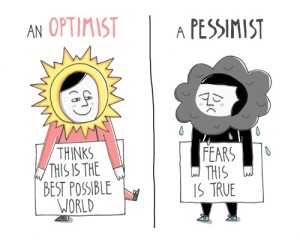 And this lack of perspective leaves them partly believing in a world that is not necessarily real – an illusion, distortion, shadow, fantasy of what life really is.
 In a post on Pastors.com Rick Warren says, “Christians should be the most grateful people on the planet. As they know that God has given us life (
 When you gather with your church family to worship, you join with others to express gratitude to God for all he has done and all he will do in your lives.
 God’s people have practiced a Thanksgiving offering for thousands of years. We practice it at Saddleback. You probably have practiced it at your church too. It’s an important part of how we say “thank you” to God.
 If you’d like any further information about
  Continuing the theme of Praise & Thanksgiving that I posted about yesterday (which you can

 Regardless of what we are going through in this life we are told to give thanks and tell of all that God has done, to all who would listen.
 But that shouldn’t detract us from giving of our praise and worship – we should give it anyway! Because of all the marvellous things that He has done in our lives and provided for us.
 Psalm 118:24 says that “


 The life and times of Perry...